
Copper vs Aluminium Ceiling Fan – Which Is Better for Home?
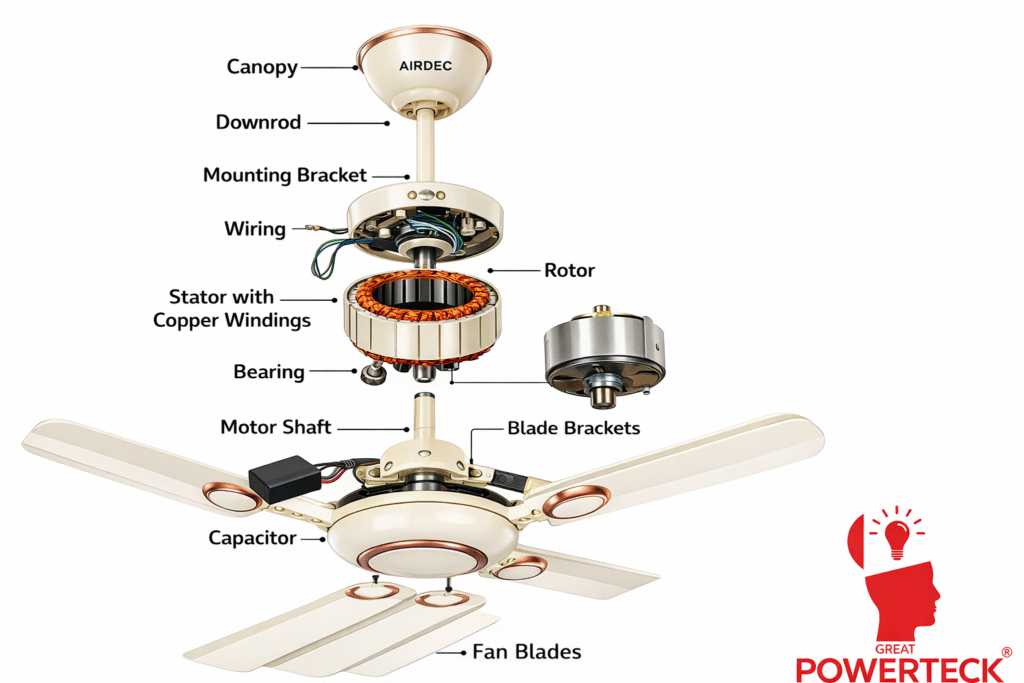
Ceiling fans work by converting electrical energy into mechanical energy. When electricity passes through the motor windings, it creates a magnetic field that rotates the motor shaft, which in turn spins the fan blades. The quality of the winding material plays a crucial role in performance, efficiency, and lifespan of the fan.
Role of Copper in a Fan Motor
In a copper winding fan, electricity flows through high-purity copper wires inside the motor. Copper has very low electrical resistance, which allows current to pass smoothly with minimal energy loss, energy efficient ceiling fan. This results in:
- Faster motor response
- Higher torque
- Better speed stability
- Less heat generation
Because copper handles heat efficiently, the motor stays cooler even during long hours of operation,Best fan for home increasing durability and safety.
Quality of Copper Used
High-quality fans use 100% pure electrolytic copper, which offers:
- Excellent conductivity
- Strong insulation bonding
- Longer motor life
- Consistent performance even under voltage fluctuations
This makes copper winding fans ideal for Indian conditions where voltage variation is common.
Copper vs Aluminium Winding Fans
| Feature | Copper Winding Fan | Aluminium Winding Fan |
|---|---|---|
| Electrical Conductivity | Very High | Lower |
| Power Consumption | More efficient | Slightly higher |
| Heat Generation | Low | High |
| Motor Life | Long-lasting | Shorter |
| Performance | Strong & stable | Average |
| Maintenance | Low | Higher over time |
Aluminium has higher resistance than copper, causing more heat buildup and energy loss. Over time, this can reduce fan speed and motor life.
Conclusion
A copper winding fan may cost slightly more initially, but it delivers better performance, energy efficiency, and long-term reliability. For homes, offices, and commercial use, copper fans are a smart investment that ensures smooth airflow, lower maintenance, and consistent comfort.